Maine Plug-In Solar
MAINE'S NEW SOLAR OPPORTUNITY
Plug-in solar just passed in Maine. Here’s how you can get involved!
In April 2026, Maine passed a law allowing you to plug a few solar panels directly into your home to generate your own electricity and offset your electric bill. No permits, no utility approval required.
The Basics
What is plug-in solar?
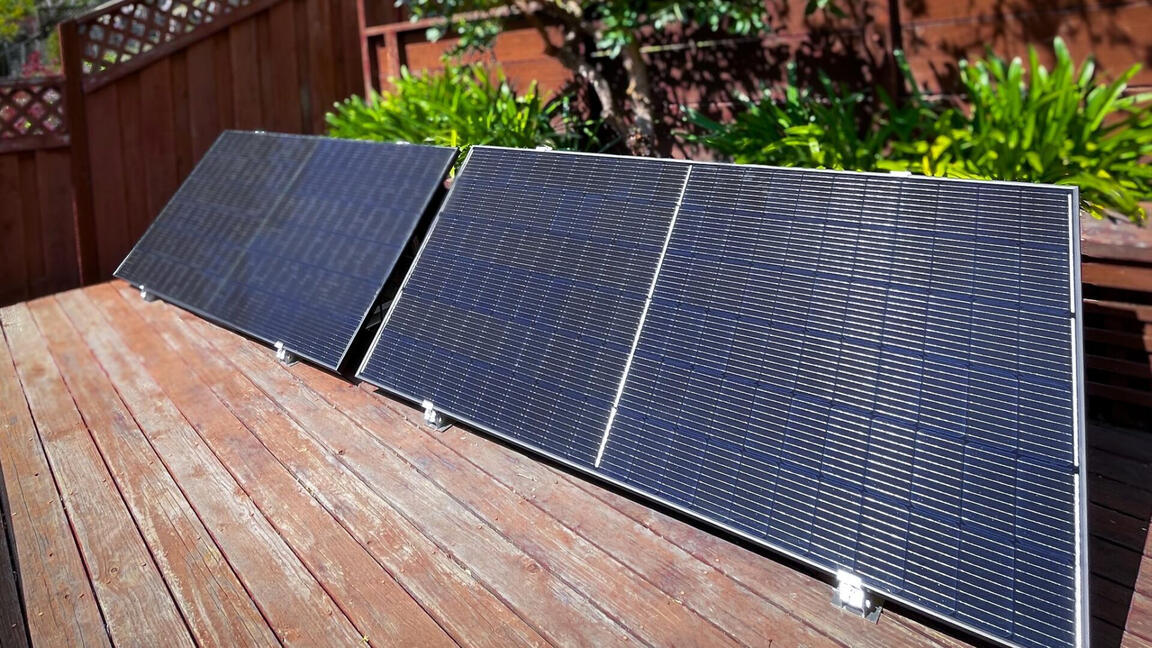
Photo credit: Solar United Neighbors
Plug-in solar (sometimes called “balcony solar”) lets you generate electricity from a small number of panels that plug right into a wall outlet. They can be placed on the ground, on a deck, or on a part of your roof you can easily access.
⚡ How many solar panels can I plug in?
You can have up to 1,200W (about 3–4 panels, roughly the load of an electric kettle). For systems above 420W, you'll need to use an electrician for the installation, and notify your utility within 30 days.
💰 How much can I save?
A full 1,200W system could save around $388 per year on Maine electric bills. Systems can cost about $1,900 today, but costs will likely fall as they get more popular. That means you could break even in less than 5 years.
🛡 Are they safe?
Yes. There are safety requirements to make sure plug-in solar is safe for you and your home. See this safety factsheet.
🚚 Can I move with them?
Yes. Plug-in solar systems are portable, which makes them a great option for anyone who moves.
Timing
Can I plug in solar today?
Not yet. The law will go into effect in July 2026.
Plug-in solar systems will have to be certified by the safety standard UL 3700, which is expected to be finalized this year.
Sign up for updates to be the first to know when and how you can install your own plug-in solar.
The New Law
What Maine’s new law actually says
Maine LD 1730, officially “An Act to Make Small Plug-in Solar Generation Devices Accessible for All Maine Residents,” was signed on April 6, 2026. It will go into effect in July 2026.
Key Provisions
Up to 420W: Plug into any standard outlet, not utility notification required
Up to 1,200W: Requires a licensed electrician, dedicated circuit, and notifying your utility within 30 days
Utilities cannot deny, charge fees for, or require pre-approval of allowed systems
Systems must meet UL 3700 safety certification (standard expected to be finalized later in 2026)
Renters must make sure installation doesn't damage the structure or violate codes
Note that the safety certifications we’re waiting on may require a dedicated circuit and plug, which means you may need an electrician to help with setting up the smaller systems too.
Resources
Where can I learn more?
Find out more from:
UL webinar on Plug-In Photovoltaic Systems: Residential Safety Concerns (getting into the weeds of electrical circuits and safety considerations)
About
Who’s behind Maine Plug-In Solar?

Emma Wendt, Energy Professional & Maine Resident
Emma Wendt is an energy professional living in Midcoast Maine. She’s excited about this new law and wants to help make it easier for Maine people to produce their own power and save money. Emma has helped Maine communities plan and build energy solutions that work for their local needs, and has also designed federal funding for energy projects in rural and remote communities.
Maine Plug-In Solar · mainepluginsolar.com